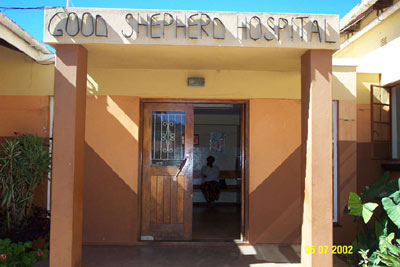
Last Friday was one of the most exciting days ever for me. This in itself is testimony to how little excitement I actually have in my life….
Anyway, I got a message saying that there were three parcels at the Post Office for me. I was busy in outpatients, so I sent my friend Jenny (a Scottish medical student) to the post office on behalf of me. After a few forged signatures and a large amount of money to pay import taxes, she returned with three very large boxes of gloves and face masks.
For those of you who don’t know the story, I will let you know the story behind this momentous occasion.
Earlier in the year, my friends at the Princess Alexandra Hospital got together and donated some gloves and anti-TB face masks for me. I actually had a really difficult time trying to find a cheap way of getting them over here. Eventually, I decided to ship them here via Australia Post. I spent $600 in doing so. I used the money that I had been given for my 30th birthday. (In January, my family organised a surprise B’day party for me and instead of gifts, they asked people to make a donation towards the hospital) and I also used the money that had been collected in the Emergency Department I had been working in.
Anyway, after the drama of my documents taking 4 months to get here, I simply lost all hope of my gloves ever arriving. I was simply overjoyed when I saw these 3 huge boxes filled with 5000 gloves and a couple of hundred face masks.
In Swaziland, if you are particularly happy about something, you do this little dance. I have only done this little dance on two previous occasions and both were when patients tested negative for HIV. I performed this third dance upon the arrival of the gloves. I was just so HAPPY! I ran through the wards telling everyone that the gloves had arrived and my excitement became contagious. The nurses were squealing with delight when they saw the high quality of the gloves. I had gloves in various sizes and we were all so happy that we actually had gloves that fit. As I distributed the gloves throughout the hospital, I felt this overwhelming joy and I know the spirit of the staff members was also lifted. I feel so incredibly blessed that I had this opportunity to provide some much needed medical supplies. Whilst it doesn’t directly impact on patient care, it makes a difference to those of us who work here. About 80-90% of the patients here have HIV. They also have diarrhoea, TB and other infectious disease that put us health workers at risk. It is a huge morale booster to know that for a couple of months we will be protecting ourselves in the best way possible.
Tuesday, September 30, 2008
Oh Happy Day!
Friday, September 26, 2008
A rather large dilemma
This week has been a pretty good week as a whole. Many positive things have occurred and this has lifted my mood enormously.
Firstly, Dr Kalangara, the doctor who was working in Internal medicine and then went on leave on my second day working here, has come back to work! This has relieved my workload in Outpatients enormously. I now do my ward rounds in the morning and then take an hour or so to do some reading or research about my patients before I go to Outpatients in the afternoon. Although I have managed remarkably well so far, it is just so nice to have the time to look things up and educate myself further on conditions I have not yet encountered in my medical career so far. I now feel that I have a much better understanding of HIV/AIDS, TB and a number of infectious diseases that I have not encountered in Australia. I’m not sure that I will ever use this knowledge again once I return to Australia, but I now feel as though I can talk with some level of expertise on these subjects.
Secondly, I have made some changes on the female ward and the results have been extremely positive. Things are much more organised and the nurses and I are working well as a highly functional team. The improvements to patient care have been remarkable. I have made communication between other teams much more effective and people are starting to realise that actually TALKING to other people and WRITING things down actually improves patient outcomes. I have now organised that I will give the nurses a tutorial every second Friday and they are very excited about this new concept. The nurses are taught how to make beds, wash patients, take vital signs and administer medication, but they don’t have a great deal of knowledge about the diseases they are seeing. I can see patient care improving if the nurses understand what they are treating. We will see how things go.
The other big highlight to the week was the instillation of TV in the student accommodation. For the past 6 weeks, I have not seen any TV or heard any radio and I have felt very “cut off” from the rest of the world. Having a TV has changed all of that. For three nights this week, I have met up with Chris, Julia and a Scottish medical student called Jenny and we have sat in front of that TV absolutely mesmerised. We watched the “Red Carpet Special” of the American Emmy awards and we sat for hours commenting on all the dresses and outfits of various celebrities. It was all so far removed from the reality that we pay witness to here, but it was great escapism. The next night we watched “Pride and Prejudice” starring Kyra Knightley and it was simply one of the most enjoyable experiences. I love Jane Austen and despite reading most of her books, I have never seen the TV or movie adaptations. I loved every second and the girls and I squealed with delight when Elizabeth and Mr Darcy suddenly declared their love for each other! It’s the very simple things here in Swaziland that elicits the most excitement!
The only downside to the week was a walk that I took yesterday. Last week, I was walking into town when a man called across the street “I think you have a beautiful bum”
I was absolutely mortified. Although I think it was intended as a compliment, I immediately interpreted it as an insinuation that my backside was rather prominent. Swazi men love big backsides on women and I was so upset that my backside had reached a proportion where it was noticeable. My diet here has changed remarkably in that it is predominantly carbohydrate based and this has led to a gain of weight. I decided that I needed to start an exercise regime as it would be most embarrassing to return from Africa, where people are starving, having put on weight.
The only “safe” walk I can take is into town. Although I have voiced my concerns about snakes, goats and cattle, the honest truth is that my biggest risk here in Swaziland is actually Swazi men. I cannot go anywhere where I will be alone. I was carrying a knife with me (My friend Louise gave me a swiss army knife before I came here and although I am sure she didn’t intend for it to be used as a weapon, I noticed that the knife on it had the potential to inflict some considerable harm), but one of the other doctors warned me that a man could overpower me and use it as a weapon against me.. I no longer carry the knife. Instead, my colleague suggested that I carry something of value on me, so that in the event that I was accosted, I could use it as a bribe in exchange for my safety.
I have nothing here of any real value, so I carry 100 rand (~$18). Hopefully, I’m worth that much…
Anyway, to get to my original point, I went walking yesterday afternoon. I walked past a car wash and a Swazi man grabbed my hand and started pulling me towards a building. I started to pull away and I kept yelling “Let me go! Let me go!”. I eventually broke free and he started laughing at me. He really enjoyed the fact that he had given me a fright. Rather than being upset, I was really angry. My attempt at reducing my butt size had been jeopardised and I felt angry that I no longer felt safe walking into town. I’m really not sure that anything bad would have happened to me as I saw another man walking on the other side of the street, but I can’t be sure.
Either I am going to have to find a walking companion or I’m going to return to Australia with a fat arse.
Wednesday, September 24, 2008
Culture and confusion
Over the past 6 weeks, I have tried to tell you of some of the many challenges I face here in Swaziland.
One of those challenges has been trying to understand the culture which is unlike anything I have witnessed in Australia.
I try to speak a little bit of SiSwati. I can greet people and ask them how they are feeling. The people here understand me and they then start rambling on in SiSwati and I have to stop them because I don’t understand any further! I also know a few clinical words. Most of my communication is through an interpreter or through “sign language” for which I have become quite infamous for around here.
The actual cultural background of my patients is a whole new area that I struggle with on a daily basis. My holistic approach to patient care means that I try to find out their background and formulate a management plan around it. A simply impossible task at times.
I will give you an example of one of my most recent challenges.
I had a young girl on my ward who was in her third trimester of pregnancy. She had AIDS and she was admitted onto my ward with meningitis. Initially, she responded well to the antibiotics but then she deteriorated markedly. I finished my ward round on Monday knowing that I would not see her the following day.
I went to outpatients and started seeing some of the hundreds of patients waiting. The situation was simply chaotic. I was trying to see patients there and the nurses in the emergency room were asking me to see patients there and I was being pulled in all directions. I was visibly stressed out.
Then one of the nurses from the ward arrived. She informed me that my pregnant patient with meningitis had just died. She then proceeded to tell me that the relatives were asking what I was going to do with the unborn baby. I looked at the nurse and said to her with some incredulity “Did you tell the relatives that the baby has also died too? A baby cannot be alive in a dead mother”
The nurse told me that they understood the baby was dead but they were wanting to know if I was going to remove the baby. By this stage I was really frustrated and confused and in an exasperated tone I said “Tell the family that I do not remove dead babies from dead mothers!”
If I hadn’t been so stressed out, I probably would have dealt with the situation in a more sensitive manner, but by this stage I was at my “melting point”. I went home that night and felt dreadful about what had transpired.
I went to the nurse the next morning and apologised for not handling the situation more appropriately. I explained that I honestly had no idea what she was talking about.
She then went on to tell me that it is Swazi culture not to bury unborn babies with their mothers. They need to be buried separately. I simply had no idea about this, but the nurse reassured me that this is not a subject that is openly spoken about. It is one of Swazi’s “taboo” subjects and the family probably would not have felt comfortable talking to me about it anyway. Apparently, the mortician removes the baby at the funeral home and the two bodies are then buried separately. I guess in some cases, this is done by doctors. I can assure you, this procedure will not be performed by this doctor.
Despite any misgivings I may have about this, it is something that I just need to accept and hopefully next time will be a little more sensitive about. Everyday I learn something new about Swaziland but I also learn something about myself.
Sunday, September 21, 2008
Gospel, God and Going crazy
I’ve done some pretty crazy things since arriving in Swaziland, but deciding to go into town, in the pouring rain, was perhaps the craziest of them all.
I needed to buy some water and all morning I waited and waited for the rain to stop. By afternoon, I realised that the rain and the blistering cold had set in. I decided to catch a combi into town. You have to feel particularly brave to catch a combi- they are little dilapidated mini vans which the locals use. They are always over packed- for example, if the seat is supposed to seat two, then four sit on the seat. I’m really surprised I haven’t caught TB yet because you are literally sitting on people who are hacking up sputum and spluttering saliva. However, it was my only option for getting water, so I waited outside the hospital for one to arrive.
There were a group of young people also waiting and they kindly offered me to wait under their umbrella. I estimate that the group was in their late adolescence, maybe early 20s. The combi took a long time to arrive. It was so bitterly cold- the wind was cutting through me like a knife and I was getting wet despite the umbrella. However, despite the difficult circumstances, the group started to sing. This leads me to a topic that I have not yet discussed previously in the blog.
SWAZIS SING ALL THE TIME. It does not matter what time it is or what is happening- they sing. Some of them are particularly good and this group at the bus stop harmonised in a way that was truly mesmerising. They tend to also stomp their feet to set the rhythm for everyone else to follow. This particular group was singing gospel and despite the fact that it was in SiSwati, I think they were singing about Jonah.
Christianity is truly alive and well in Swaziland. There are churches of every Christian denomination here and the people are devoutly religious. The only songs I hear are gospel. I wake up every morning to gospel songs. At lunchtime, when I return to my flat to eat, I hear the other staff members in the chapel singing gospel. On the weekends, gospel songs are heard over loud speakers for the patients to enjoy. The nurses often sing gospel songs to themselves as they are working (much the same way in which I would hum a song from Delta Goodrem or Kylie). I often see groups of girls and boys walking into town, singing gospel as they travel along the dusty roads.
A few times a week, a group of women from a nearby church come to sing gospel to my patients on the ward. I have to exert a certain tolerance of this because I am usually still doing my wards rounds and it is hard to concentrate when a group of passionate singers are singing the virtues of God.
Preachers tend to have free reign on the wards. They do not preach quietly. They remind me of American evangelists- they are loud, they are flamboyant and they speak with fervour and passion. I don’t understand what they are saying, but one day I asked the nurses and they told me that the preacher was telling the patients that God would cure them of their illness.
Doctors here often pray before they start operating or seeing patients. One of the surgeons here wears a baseball cap that reads “I love Jesus”. A few weeks ago, one of the nurses was lamenting that she had lost her “prayer partner”- another nurse suggested that she ask Dr Melanie to step into this position, but I wryly replied “I would not make a good prayer partner”. Maybe it was the way I said it, but they erupted in a fit of giggles. So many people have embraced me and asked God to bless me that I sometimes wonder if I am now able to walk on water.
I guess this is what I struggle with most. I was baptised in the Anglican church but I have to admit that I cannot remember the last time I attended church. Mum sent us to Sunday school as children and she then spent thousands of dollars educating my sister and I in Catholic secondary schools. A lot of people presume that I am religious given the way I have chosen to live my life, but I have to admit, I struggle with the concept of God. I don’t know if there is a God and certainly, since arriving in Swaziland and paying witness to the devastation here, I have a hard time believing that God exists or truly cares about people. I know this may offend some of you who are reading this, but I always promised myself that I would be nothing but honest with what I wrote on these pages.
Despite my uncertainty surrounding “God”, I do believe I am a spiritual person. I have a belief in humanity and rather than praying to God, I actually spend a bit of time praying for humanity. It’s not something I do as a ritual or before I go to bed at night, I just spend time in silence, meditating and reflecting on my hopes for the world and its people. I try to live a good, compassionate life that is honest and committed to the good of others. I’m not sure this has much to do with whether or not I believe in God.
When I first arrived here, I could not understand the unwavering faith of these people. These people often don’t have enough money to eat or drink and they are struck down with one of the most devastating epidemics to afflict mankind. I found it difficult to comprehend that they would think that God loves them. Now, after a few weeks of silent observation, I realise that God is all they have. If they find comfort and peace in His existence then I should do everything I can to support this. I wish I could find that inner peace and devotion to help me get through this experience here. I wish Gospel songs didn’t give me a headache.
Friday, September 19, 2008
A roller coaster of emotions
It seems that I ride a roller coaster of emotions here in Swaziland.
I started the week positive, upbeat and full of hope. By the middle of the week, I came crashing down.
I woke up on Wednesday with a terrible headache- almost identical to the one I had suffered a week earlier. This time, it was bad enough to keep me in bed and prevent me from doing my ward round. I felt really bad. I knew I was letting my patients down- this did not improve the wave of depression that I also thought was starting to envelope me. I spent the whole day in bed- only rising to make some toast and some of that ghastly coffee I continue to suffer.
I got up at 6pm feeling exceedingly low. I managed to have a shower and thought that this was my major achievement for the day. I decided to come to the computer and see if there were any much needed messages. I emailed my Mum and told her I was not doing well. I then emailed my friend Iain and told him that I was “struggling”- a gross under-representation of what I was truly feeling. I contacted him through “Facebook”- quite an amazing achievement given that I cannot even access “Hotmail” from this computer. I remember staring at the screen and it was quite a surreal experience. I was looking at some wacky things posted on his “wall” and I felt so removed from the world I was living in. The truth is, I sometimes feel like I’m living on another planet- things here seem a world away from my existence in Australia. The reality is that I’m only a 15 hour flight away from Australia, but here I face conditions I never imagined existed. I am on the same planet and yet seem so far away.
I was if, by divine providence, that Julia came up to use the computer. She found me just staring at the computer screen. With out any words, she embraced me and it was then, for my first time in Swaziland, that I started to cry. I don’t mean a tiny little sniffle- I mean absolute sobbing, where the pain seems to rise from the bottom of your stomach. I wailed in much the same way as those girls did when they lost their mother. My eyes swelled up and snot poured uncontrollably from my nose. I cried and I cried and I cried. I am grateful that it was only Julia who paid witness to this fragile moment in my life. I know that even though I am disclosing this moment to you now, she will never reveal to anyone else what took place that night. We didn’t exchange any words. There are no words to say in such situations and it is only those that are present who truly understand the extent of emotions that are evoked here.
I went back to my flat, took some of my precious “mersyndol” and slept for another 10 hours.
I woke the next morning and contemplated another day in bed. I felt completely defeated. I then realised that I couldn’t continue like this. I had two options- soldier on or get on a plane and come home. I realised that I probably would never forgive myself if I came home early and I got out of bed and prepared for another day at the Good Shepherd.
The day didn’t exactly get off to a good start. One of the first patients that I went to see looked awfully peaceful as I started to read the admission notes from the night before. I then went to examine her and found that she was not breathing and had no pulse. Lord knows how long she had been dead. She came in with high sugars secondary to her diabetes- I have no idea how she died.
I was continuing the round when one of my surgical colleagues came up to me to inform me about one of my patients on the ward.
This young girl had been with me for some time. She was 18 and had AIDS. She was initially admitted with diarrhoea which I successfully treated. I discharged her home, but unfortunately, she could not pay the bill as no family members came to collect her. She therefore stayed on the ward. During her time waiting for her family, she caught a nasty pneumonia called PCP, again which, I successfully treated.
Apparently, whilst I was in bed feeling very sorry for myself, she started to have a nose bleed. The nursing staff called the surgeon who apparently ordered some medication. The girl continued to haemorrhage and the nurses were getting worried. They asked my friend Chris, to call the surgeon again. Chris called and told him that he needed to come and see the patient. Apparently he was busy in clinic but eventually came to find the young girl exsanguinating. He took her to theatre, but she bled out and died.
He came up to me on my ward round and told me that this girl had platelets of 11 (platelets are the cells in the blood that help it clot and 11 is an incredibly low number). He had taken a blood test on the girl when she was in theatre.
He told me that if I had taken a blood count earlier, I would have known that the platelets were dangerously low- perhaps I could have transferred her to Mbabane for treatment and she wouldn’t have died.
In my already fragile state, this only resulted in yet another round of tears (but thankfully a little more dignified this time). I really felt as though I had contributed to this girls’ death.
After a prolonged discussion with my beautiful friend Katerina, I realised that perhaps things had been blown out of proportion. Firstly, there was never any indication to do a full blood count on this girl. In Australia and US, it is a very common test, but here in Swaziland- I really have to have a good reason to do it. This girl never displayed any bleeding problems and I had no reason to investigate for platelets. I only order tests if I think it will alter my management. Patients have to pay for every test and medication I prescribe and I have become acutely aware of the consequences of over investigating- people simply can’t afford to eat after a hospital stay.
Secondly, even if I did know her platelet count, there was never anything I could do about it. This patient did not have enough money to be discharged from Good Shepherd. In order to be transferred to Mbabane, you need family to take you and money to pay for it. Both of which this girl did not have.
Thirdly, this girl had AIDS and in reality there probably isn’t much Mbabane could have done either.
I still felt very shaken and I was so disappointed that my colleague spoke to me in this way. I am working so hard. This is really difficult. When I’m not working I’m reading textbooks and trying to learn as much as I can. I am professionally isolated here and it can be incredibly lonely.
I woke up today feeling much better. It’s a public holiday here so that people can vote in a farcical election. Nevertheless, it is an opportunity to remind me just how peaceful Swaziland is. Despite all of its problems, the elections should proceed today without any violence. This cannot be said for very many African countries. I am truly grateful that I chose to work here. I cannot imagine how difficult it would be to work in conditions like mine and have the added concern of violence, rape and torture.
I am spending the day with Katerina and Frank. They are returning to Germany tomorrow and they want to spend their last day in Swaziland with me. I am really touched by this. They are truly remarkable people and I feel so blessed to have met them. I will miss Katerina doing the ward round with me. Despite her being a student, she is incredibly bright and I appreciated bouncing ideas off her and her gentle reminders when I would forget to order prophylaxis. I know that this won’t be the final goodbye for us- we will inevitably meet again. Today we will appreciate the “other side of Africa”- we are off to a game park. Hopefully a little sunshine and fresh air will leave me feeling invigorated- ready to face another week.
Monday, September 15, 2008
At last- some hope

My travelling companions were Katerina, Frank and Michelle.
Katerina is a mature age medical student from Germany. She used to be a nuclear physicist until one day, she was travelling around Australia on a motorbike when she had an accident and hurt her ankle. She was in the middle of the outback, with no doctor for hundreds of kilometres and she suddenly knew what it was like to be sick and injured and not have any medical assistance nearby. She quit her high paying job as a designer of BMW motorcycles and started medical school. She plans to graduate and then work in the third world. I love her to bits and she is a true inspiration for me.
Frank is married to Katerina. He is also a physicist and designs cars for BMW. He wants to identify a project in a third world and work along side Katerina from a more strategic point of view. Very warm, charismatic and incredibly smart without being a nerd.
Michelle is from Australia. She is an opthalmology registrar. During her vacation time, she travels to third world countries and volunteers her time on eye projects. She is only here for a couple of weeks, but we have become firm friends.
We started out on Saturday morning in our small 2 door car the size of a Holden Barina. It took us about 3 hours, along a very rough dirt road, to reach a place called Bulembo. The drive was extraordinarily scenic and I began to understand why Swaziland is called “the Switzerland of Africa”.
Bulembo is an old deserted mining town. In 2001, it closed it’s mine and it was left as a ghost town. An entrepreneur in Canada, as well as some incredibly clever South Africans decided to reinvent the town with the sole purpose of helping orphans. There are currently 90,000 orphans in Swaziland (this is in a population of 1 million). The number of orphans is expected to increase dramatically by 2020. Swaziland only has enough capability to house 800 orphans in “institutions”, the rest of them are left to survive with other members of the extended family. This is all great in theory, but the trouble is, with almost 50% of the population infected with HIV, the relatives are simply dying off. There is no one to look after these children. Not only are children orphaned, but there are children here who are abused, tortured and neglected. Babies are often found dumped in the bushes (mothers often have no other choice with poverty and starvation their only option). There simply is no where else for these children to go.
Bulembo was created with the thought that a town could be created where Swazis could be self-sustainable and orphans could be cared for. In only two years, these amazing entrepreneurs have established industry that has the potential to grow and allow Swazis to create a future. At the moment they are utilising the natural resources of the area. They have a logging industry for timber, a honey factory and there are plans in place to open a factory which will bottle water to sell to the public. They also have the most amazing Lodge there to accommodate tourists. The scenery is simply breath-taking- it is so green and mountainous. The air is so fresh and flowers blossom everywhere. The Lodge is idyllic with exactly me in mind. I walked into my room and just gasped at how beautiful it was. You can eat in the immaculate gardens, or sit in the lounge next to a gorgeous open fire. The service is excellent and the staff are truly delighted that you are there.


There are a few walks to do around the area. After we arrived, we started to explore. In the distance I could see a white couple with 5 small black children. My inquisitive nature led me up to them and I was delighted to find out that we had bumped into one of the groups of orphans. This was the beginning of a truly magical afternoon. The children, aged 3 and 4 were very affectionate with us and we played with them, held their hands, cuddled with them and enjoyed their company for hours. The “parents” of these children were two South Africans, the same age as my parents with their own adult daughters and grandchildren. They heard about this programme and packed their bags to come and live in Swaziland and care for a group of 5 young children. The children stay with them until they are 5 when they move onto another residence and start school. These two people are simply angels- sent here from heaven to do one of the amazing jobs on earth. These children are happy, they are well fed and they are healthy. Some of them obviously have HIV, but these people make sure their medicine is given each day and ensure regular check-ups with paediatricians. The children are thriving.
I could barely sleep that night- I was so inspired by what I had seen and for the first time since arriving in Swaziland, I started to believe their was hope.

The next morning, at breakfast, I met the CEO of the project. An enigmatic man called Andrew. He is a born and bred Swazi (although white) and his family have been in Swaziland for generations. He is a lawyer with a commerce background. He told me about his vision for Bulembu and the plans to extend the town, the projects and the capability to care for orphans. I told him that if he could get the funding, I would come back here after getting my fellowship and open a hospital for the town. I will be attending the Board meeting in October.
We then went to another home for orphans. This place was established by Robyn and Gerry- a couple who have been living in Swaziland for over ten years and have devoted their lives to helping orphans throughout Swaziland. Again, I have never met such extraordinary people in all my life. We heard about some of the absolutely tragic backgrounds of some of the orphans and it was simply inspiring to hear of the strength of such little children who come from absolutely nothing. Robyn, with the assistance of 19 other women, looks after 43 babies from birth to three years. The place was absolutely amazing- cots, toys, changing tables, nappies, bottles and baths everywhere. Not to mention 43 adorable black little babies who melted my heart immediately. Despite the number of babies- the place was incredibly clean, organised and efficient. The children were just delightful and I spent hours cuddling and changing the occasional nappy. The babies wear cloth nappies and the people there were amazed at my clever ability to fold nappies and get a bottom changed in a matter of seconds. The fact is, despite the lack of my own children, I have changed thousands of nappies in my lifetime- I can do it with my eyes closed!
I left that place feeling invigorated with a new passion and direction for my life. I cannot wait to share Bulembu with my parents and sister when they arrive in December.
We got back home late to Siteki and I was again reminded of the grim reality of Swaziland and how far we have to go. My ward round was exhausting and chaotic. I hate Mondays as I always arrive to see how many have died over the weekend and then I receive a whole new group of patients with the same devastating illnesses, just different faces. I never thought that I would ever think a “really good day” is when only one patient dies.
The line for outpatients was never ending and it was agonising churning through them all. The reality is that I face exactly the same scenario tomorrow. Life goes on.
Thursday, September 11, 2008
Can you believe I've been here a month?
I have not been able to make many blog entries this week- simply because I have been exhausted and incapable of doing much except for working and responding to a couple of emails.
It has now been a month since I have arrived in Swaziland and for the first time I have felt somewhat homesick. I miss my family and I miss my friends. I miss my work colleagues. I feel professionally isolated here- a feeling I have been lucky enough to have never experienced before.
I have settled into a routine and certainly my efforts on the female ward are having positive effects. I’m recognising clinical syndromes a lot more quickly and some of my patients have done remarkably well. I’m actually discharging people home well and in a much better condition than when they arrived. The nurses really like me and respect me a great deal- the care of the patients has consequently improved immensely. But even so, things here are still incredibly difficult.
Not only am I dealing with predominantly AIDS related illnesses and TB, but I am also faced with chronic problems such as hypertension and diabetes. These are “western problems” and you would think the management for me would be easy. Here in Swaziland- nothing is easy. For instance, I am often having the take into consideration that many of my patients live in extreme poverty. This has numerous consequences
They cannot afford the transport to actually get to the hospital or clinic. The cheapest bus fare (in the back of an overfilled combie bus) costs about 4 rand (70-80cents). Most people don’t even earn this in a day. If I attempt to ask some patients back to review their progress, I’m told that they can’t afford another trip.
They cannot afford the consultation/ hospital fee. A consultation with me costs 15 rand. A hospital stay- much more. They cannot leave hospital unless they have paid their bill. Even if I discharge them, they often lodge in the hospital until a family member can obtain enough money to pay the hospital bill. This leaves them vulnerable to nosocomial (hospital-acquired) infection which is one of the greatest challenges I face in my immunosuppressed patients.
They cannot afford their medications. Many patients come in unwell because they have not been able to afford their diabetic and antihypertensive medication. I have drugs to treat these conditions but my patients are unable to afford them. These diseases are treatable and prevent heart attacks and strokes- the devastating consequences I see frequently.
Everything here is hard. During my ward round today, I got slightly exasperated and said “Is there anything in Swaziland that’s easy?” The nurse who was with me, paused for a moment, thought of her answer and then replied “It’s easy to catch HIV here”. Not exactly the inspiration I was looking for.
I have another patient here. She’s 33 and has AIDS. In 2004 she had a spinal anaesthetic, got an infection and now she’s a paraplegic. There are no services to deal with complicated medical problems like this. She came in septic because of her infected pressure sores. The skin on her buttocks has eroded away and her chronic diarrhoea (another complication of HIV) has embedded faeces into the wounds. I really don’t have any hope for this woman- we don’t even have the facilities to lift here out of bed so that we can clean the areas properly. Incontinence pads here are really expensive so each patient gets one a day- this means that for 24 hours, she sits in her urine and faeces. Antibiotics may help, but the reality is that it will probably be one infection after another. Her CD4 count is slowly deteriorating and I’m even wondering if it’s worth starting her on anti-retrovirals. The thing is, the HIV virus typically mutates and becomes resistant to drugs about every 4 years. In Western countries, we counteract this by prescribing new anti-retroviral (ARV) drugs and I believe there are about 20 to choose from. This allows patients with AIDS to live quite prolonged, good quality lives. Here in Swaziland, we only have 6 antiretroviral drugs, so once resistance develops there are little choices for choosing alternative drugs. In reality, by commencing ARVs, we are not exactly prolonging life for very long. A lot of the patients have compliance issues because they can’t afford to get to clinic for repeat prescriptions. Resistance to these drugs often develops quickly. Many of the AIDS patients also have TB and the two drugs for each illness do not react well with each other- often we have to cease the ARVs so that we can treat the TB. This gives the virus 6 months to mutate and for CD4 counts to decline. I feel like I’m constantly banging my head against a brick wall.
Besides all the clinical problems, there are also many social problems which I don’t feel I will ever be able to influence. Since working on the female wards, I have come to learn that violence against women is very common. I know it’s also common in western countries, but there are very few options for women to leave their husbands despite being continually battered. Women have very little status here and as a consequence there is no framework for women to seek refuge. The low status of women also leads to a lot of sexual abuse, but this is a subject that I have much to say on, so I will leave for a future blog.
It is all a little overwhelming, but today some of my anguish was relieved, if only for a short time. It seems that Swaziland post has finally started working. I sent some documents here in May (I paid $40 to have them couriered here) and today they finally arrived. However, I was also thrilled to hear that I had received other mail. I received my first letter from a friend, Elizabeth, who is a nurse I work with in PA. She is currently in Denmark visiting her son and she sent me the loveliest letter. As soon as I got it, I raced back to my flat, made a cup of the ghastly coffee they have here and savoured every word of the letter. Email is great, but receiving a letter is just so sweet. The other bonus is that the letter was sent from Denmark- home to Australia’s beautiful Princess Mary- a thrill that I think only I could appreciate.
I then got news that I had a parcel at the post office. I was so excited, I just couldn’t wait to go and see what it was. During my lunch break, I desperately tried to find someone to take me into the post office. To cut a very long, complicated story short, I ended up bribing a combie driver to drive me in. The fare is usually 4 rand, but I ended up having to pay him 30 rand. I didn’t care- I was so desperate to get the parcel! The parcel was from my friend Jacqui and she had put together a care parcel- two books, hand cream and lip balm. It was like Christmas day, I was simply overcome. Thank you girls- you cannot imagine what your kindness means to me. No doubt I will read your kind letters for days to come!
I’m going away this weekend- I’m going to visit a new orphanage that has just been set up. No doubt I will give you all the details once I return.